¿Quién salió con Diane Keaton?
Al Pacino salió con Diane Keaton del ? al ?. La diferencia de edad fue de 5 años, 8 meses y 11 días.
Warren Beatty salió con Diane Keaton del ? al ?. La diferencia de edad fue de 8 años, 9 meses y 6 días.
Woody Allen salió con Diane Keaton del al . La diferencia de edad fue de 10 años, 1 meses y 6 días.
Diane Keaton
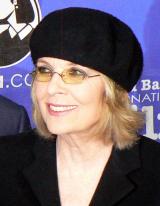
Diane Hall Keaton (Los Ángeles, 5 de enero de 1946-Los Ángeles, 11 de octubre de 2025)fue una actriz, directora, cantante y productora de cine estadounidense. Ganadora de un Óscar a la mejor actriz, dos premios Globo de Oro y un Bafta. Junto con Faye Dunaway y Katharine Hepburn, fue la actriz con más películas en la lista de las 100 mejores películas, según el American Film Institute.
Leer más...Al Pacino
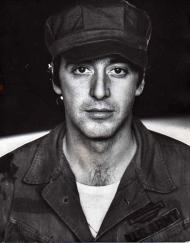
Alfredo James Pacino ( pə-CHEE-noh; Italian: [paˈtʃiːno]; born April 25, 1940) is an American actor. Known for his intense performances on stage and screen, Pacino is widely regarded as one of the greatest actors of all time. His career spans more than five decades, during which he has earned many accolades, including an Academy Award, two Tony Awards, and two Primetime Emmy Awards, achieving the Triple Crown of Acting. He has also received four Golden Globe Awards, a BAFTA, two Actor Awards, and was honored with the Cecil B. DeMille Award in 2001, the AFI Life Achievement Award in 2007, the National Medal of Arts in 2011, and the Kennedy Center Honors in 2016. Films in which he has appeared have grossed over $3 billion worldwide.
Pacino started acting in theater, ranging from underground to off-Broadway and out-of-town productions to Broadway. A method actor, Pacino studied at HB Studio and the Actors Studio where he was taught by Charlie Laughton and Lee Strasberg. Pacino went on to receive the Academy Award for Best Actor for his role in Scent of a Woman (1992). His other Oscar-nominated roles were in The Godfather (1972), Serpico (1973), The Godfather Part II (1974), Dog Day Afternoon (1975), ...And Justice for All (1979), Dick Tracy (1990), Glengarry Glen Ross (1992), and The Irishman (2019). Pacino has starred in many other notable films, including The Panic in Needle Park (1971), Scarecrow (1973), Scarface (1983), Sea of Love (1989), The Godfather Part III (1990), Frankie and Johnny (1991), Carlito's Way (1993), Heat (1995), Donnie Brasco, The Devil's Advocate (both 1997), The Insider, Any Given Sunday (both 1999), Insomnia (2002), The Recruit (2003), Ocean's Thirteen (2007), Once Upon a Time in Hollywood (2019), and House of Gucci (2021).
On television, Pacino has acted in multiple productions for HBO, including Angels in America (2003) and the Jack Kevorkian biopic You Don't Know Jack (2010), winning a Primetime Emmy Award for Outstanding Lead Actor in a Miniseries or a Movie for each. Pacino starred in the Amazon Prime Video series Hunters (2020–23). He has also had an extensive career on stage. He is a two-time Tony Award winner, winning Best Featured Actor in a Play in Does a Tiger Wear a Necktie? (1969) and Best Actor in a Play for The Basic Training of Pavlo Hummel (1977). He has also acted as Shylock in a 2004 feature film adaptation and 2010 stage production of The Merchant of Venice.
Pacino made his directorial debut with the documentary Looking for Richard (1996), for which he won a Directors Guild of America Award for Outstanding Directorial Achievement in Documentary. He directed and starred in Chinese Coffee (2000), Wilde Salomé (2011), and Salomé (2013). In 2006, he allowed for his likeness to be used in the video game Scarface: The World Is Yours. He wrote his memoir Sonny Boy, which was published by Penguin Press in 2024. Since 1995, Pacino has been co-president of the Actors Studio (he was the co-artistic director from 1981 to 1983).
Leer más...Diane Keaton
Warren Beatty
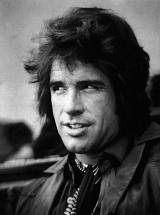
Henry Warren Beatty (né Beaty; born March 30, 1937) is an American actor and filmmaker. His career has spanned over six decades, and he has received an Academy Award and three Golden Globe Awards. He also received the Irving G. Thalberg Award in 1999, the BAFTA Fellowship in 2002, the Kennedy Center Honors in 2004, the Cecil B. DeMille Award in 2007, and the AFI Life Achievement Award in 2008.
Beatty has been nominated for 14 Academy Awards, including four for Best Actor, four for Best Picture, two for Best Director, three for Original Screenplay, and one for Adapted Screenplay – winning Best Director for Reds (1981). He was nominated for his performances as Clyde Barrow in the crime drama Bonnie and Clyde (1967), a quarterback mistakenly taken to heaven in the sports fantasy drama Heaven Can Wait (1978), John Reed in the historical epic Reds (1981), and Bugsy Siegel in the crime drama Bugsy (1991).
Beatty made his acting debut as a teenager in love in the Elia Kazan drama Splendor in the Grass (1961). He later acted in John Frankenheimer's drama All Fall Down (1962), Robert Altman's revisionist western McCabe & Mrs. Miller (1971), Alan J. Pakula's political thriller The Parallax View (1974), Hal Ashby's comedy Shampoo (1975), and Elaine May's road movie Ishtar (1987). He also directed and starred in the action crime film Dick Tracy (1990), the political satire Bulworth (1998), and the romance Rules Don't Apply (2016), all of which he also produced.
On stage, Beatty made his Broadway debut in the William Inge kitchen sink drama A Loss of Roses (1960) for which he was nominated for the Tony Award for Best Featured Actor in a Play.
Leer más...Diane Keaton
Woody Allen

Woody Allen (nacido como Allan Stewart Konigsberg; Nueva York, 30 de noviembre de 1935)es un director de cine, actor, comediante estadounidense. Su prolífica carrera abarca más de seis décadas durante las cuales ha dirigido más de cincuenta películas.
Comenzó su carrera como escritor de comedia en la década de 1950 escribiendo chistes y guiones para televisión y publicando varios libros de historias cortas de humor. A principios de la década de 1960, actuó como comediante de stand up con una tendencia a desgranar monólogos en lugar de chistes tradicionales. En sus actuaciones fue remodelando su personalidad pública como la de un individuo intelectual, inseguro, nervioso y dado a las reflexiones metafísicas y psicoanalíticas. Según Allen, su personalidad en la vida real es bastante diferente. En 2004, Comedy Central clasificó a Allen en el cuarto lugar de la lista de los 100 mejores comediantes, mientras que una encuesta del Reino Unido clasificó a Allen como el tercer mejor comediante.
A mediados de los años sesenta, Allen estaba escribiendo y dirigiendo películas, primero especializándose en comedias físicas antes de pasar a material dramático influido por el cine de arte y ensayo europeo durante la década siguiente, y después alternando entre comedia y drama. A menudo se lo identifica como parte de la ola de cineastas del Nuevo Hollywood desde mediados de los años sesenta hasta finales de los setenta. Allen a menudo protagoniza sus películas, generalmente usando el personaje que desarrolló en un standup. Algunas de sus películas más conocidas son Annie Hall (1977), Manhattan (1979), Hannah y sus hermanas (1986), Crímenes y delitos menores (1989) y Medianoche en París (2011). En 2007 dijo que Stardust Memories (1980), The Purple Rose of Cairo (1985) y Match Point (2005) fueron sus mejores películas. El crítico Roger Ebert describió a Allen como «un tesoro del cine».
Allen ha recibido muchos elogios y honores a lo largo de su carrera. Ha ganado cuatro premios de la Academia: tres al Mejor Guion Original y uno al Mejor Director. También obtuvo nueve premios de la Academia Británica de Cine. Su guion para Annie Hall fue nombrado el guion más divertido por el Writers Guild of America en su lista de los 101 guiones más divertidos. En 2011, la cadena PBS televisó la biografía de la película Woody Allen: un documental sobre su serie American Masters.
En marzo de 2020, la editorial neoyorkina Arcade Publishing publicó en Estados Unidos su libro de memorias A propósito de nada (Apropos of Nothing). Dos meses después llegó la versión en español, editada por Alianza Editorial.
Leer más...