¿Quién salió con Berenice (hija de Herodes Agripa I)?
Titus salió con Berenice (hija de Herodes Agripa I) del ? al ?.
Berenice (hija de Herodes Agripa I)
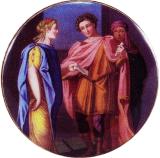
Berenice de Cilicia, también conocida como Julia Berenice y a veces escrito Bernice (28 – ?), fue una princesa judía, hija de Herodes Agripa I y Cypros, y hermana del rey Herodes Agripa II, reina cliente del Imperio romano durante la segunda mitad del siglo I. Berenice pertenecía a la dinastía herodiana, que gobernó en la provincia romana de Judea entre 39 a. C. y 92 d. C. Escasos datos sobre su vida han llegado a través de Flavio Josefo, quien narró la historia del pueblo judío y escribió un relato de la gran rebelión judía de 67, además se encuentran menciones sobre ella en Tácito, Juvenal, Dion Casio y Suetonio. En los Hechos de los Apóstoles, también se la nombra. Desde el Renacimiento se ha hecho famosa por su tumultuosa vida amorosa, reputación que comenzó a partir de los antiguos autores romanos quienes se hicieron eco de la desconfianza contemporánea hacia las princesas orientales. Después de una serie de matrimonios fallidos en los años 40, pasó gran parte del resto de su vida en la corte de su hermano Agripa II, entre rumores de una relación incestuosa entre ellos. Durante la primera guerra judeo-romana, comenzó una relación amorosa con Tito Flavio Vespasiano, futuro emperador. Su impopularidad entre los romanos, sin embargo, obligaron a Tito a cesar su relación con Berenice al ascender al trono en el año 79. Cuando él murió, dos años después, Berenice desaparece de la documentación histórica.
Leer más...Titus
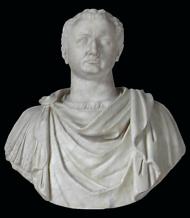
Titus Caesar Vespasianus ( TY-təs; 30 December 39 – 13 September 81 AD) was Roman emperor from 79 to 81 AD. A member of the Flavian dynasty, Titus succeeded his father Vespasian upon his death, becoming the first Roman emperor ever to succeed his biological father.
Before becoming emperor, Titus gained renown as a military commander, serving under his father in Judea during the First Jewish–Roman War. The campaign came to a brief halt with the death of emperor Nero in 68 AD, launching Vespasian's bid for the imperial power during the Year of the Four Emperors. When Vespasian was declared Emperor on 1 July 69 AD, Titus was left in charge of ending the Jewish rebellion. In 70 AD, he besieged and captured Jerusalem, and destroyed the city and the Second Temple. For this achievement Titus was awarded a triumph; the Arch of Titus commemorates his victory and still stands today.
During his father's rule, Titus gained notoriety in Rome serving as prefect of the Praetorian Guard, and for carrying on a controversial relationship with the Jewish queen Berenice. Despite concerns over his character, Titus ruled to great acclaim following the death of Vespasian on 23 June 79 AD, and was considered a good emperor by Suetonius and other contemporary historians.
As emperor, Titus is best known for completing the Colosseum and for his generosity in relieving the suffering caused by two disasters, the eruption of Mount Vesuvius in AD 79 and a fire in Rome in 80 AD. After barely two years in office, Titus died of a fever on 13 September 81 AD. He was deified by the Roman Senate and succeeded by his younger brother Domitian.
Leer más...